NoMad
Loft Space.
Tell us once what you're after — including the floors that never hit the listing sites. A person reads it. That's the whole thing.
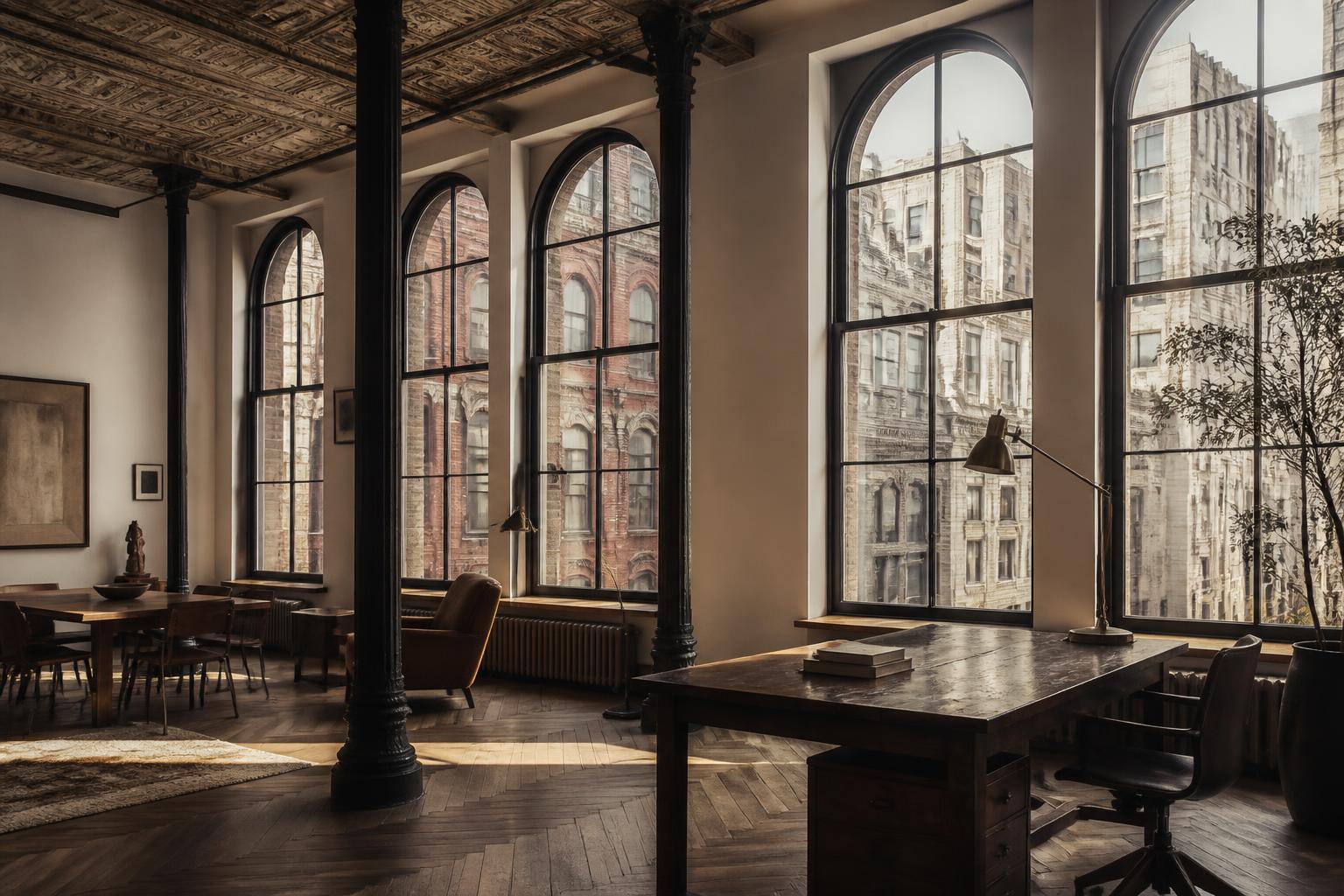
Seven questions.
That's the whole thing.
Under two minutes. No account, no login. A person reads every one.
How much room do you need?
Before you tour, hear what to look for.
Structure, submarkets, and the questions worth asking on a walkthrough — including the ones that decide whether a floor works for what you make.
Mechanical Realities of NoMad Office Lofts
A practitioner's briefing on what these prewar showroom floors will and won't do — hours, freight, floor loads, and the neighborhood label. 16 minutes.
AI-narrated
Read the transcript
Host 0Today, we're doing a deep dive into exactly what it takes to evaluate and lease a commercial office loft in one of Manhattan's most heavily marketed neighborhoods.
Host 1Right. And we are using a strictly factual briefing today. This is meant for practitioners rather than, you know, relying on a glossy brochure.
Host 0Which is necessary because the marketing materials here can be incredibly deceiving.
Host 1Exactly. I mean, imagine signing a 10-year lease on a gorgeous high-ceiling space. You wire up your entire team, you move in, and then on day one, you realize you cannot run your business past six in the evening.
Host 0Because your floor shares a poorly insulated ceiling with a boutique hotel.
Host 1Yes, exactly. That is the kind of expensive operational nightmare that happens when tenants rely on marketing materials instead of physical mechanics.
Host 0So we are looking closely at the actual realities of this real estate market for you to really cut through the noise.
Host 1Because it is a very noisy market.
Host 0It really is. Okay, let's unpack this. The core financial reality we have to deal with first is that NoMad is a name from 1999 that was applied to buildings from around 1900. And nobody has ever agreed on where it actually ends.
Host 1No, they haven't. The geography of this market is incredibly malleable. And that is entirely by design.
Host 0By design.
Host 1Yeah. When you look at the historical record of how this area was defined, the sheer variance is actually startling.
Host 1What's fascinating here is that a 1999 newspaper piece drew the boundary from 23rd to 34th Streets between Madison and Second Avenues.
Host 0Okay, that's a pretty wide net.
Host 1It is. But then, just two years later, a 2001 book put it from Sixth Avenue to Park Avenue South.
Host 0Which shifts it entirely.
Host 1Right. Then a 2010 magazine mapped it from Broadway to Park Avenue South.
Host 0Wow.
Host 1And if you look at common usage today, it is much tighter than all of those, roughly 25th to 30th Streets from Sixth Avenue to Lexington Avenue.
Host 0Okay, so the boundaries just keep shrinking and moving around.
Host 1Exactly. But all of those conflicting definitions are still circulating and they are actively being used on listing sheets today.
Host 0I mean, that seems like a massive red flag. If I am looking at a map, I expect a boundary line to represent a fixed legal reality, not just, you know, a suggestion.
Host 1Yeah, you would think so.
Host 0What is a practical consequence for a tenant when the geography is that fluid?
Host 1Well, the consequence is directly tied to the asking rent. Because the boundaries are fluid, the exact same floor in the exact same building can be marketed as NoMad.
Host 0Right.
Host 1Or it can be marketed as Flatiron. Or it can be marketed as Midtown South. The label dictates the premium.
Host 0So the landlord just picks whichever name sounds more expensive?
Host 1Precisely. The owner or the broker will simply choose the neighborhood name that currently commands the highest dollar amount per square foot.
Host 0Wow. Okay, so the very first question a tenant needs to ask on a tour isn't about the building's heating and cooling system or the lease terms. It is asking what else the space has been marketed as and what it went for under that previous name. Because you need to know if you're paying a premium just because the landlord swapped out the word Flatiron for NoMad on the brochure.
Host 1Right, that is a huge takeaway for anyone listening.
Host 0But if the name of the neighborhood is completely malleable, the physical buildings themselves are, you know, they are absolutely fixed in time.
Host 1Very much so.
Host 0I am looking at these structures and they look like heavy industrial warehouses. But from what I gather, their physical limits are actually a massive liability for certain tenants today.
Host 1They are.
Host 0Why does the physical architecture of these specific blocks dictate everything a tenant inherits today?
Host 1Because the visual aesthetic is highly deceptive. I mean, these blocks were built for showing goods, not making them.
Host 0Oh, okay.
Host 1From the 1870s to the 1920s, this was the city's gift, toy, and novelty showroom district.
Host 0Just showrooms.
Host 1Just showrooms. Buyers came
Host 0from across the country to view samples, write down their orders, and then the actual heavy manufacturing was done somewhere else entirely.
Host 1So they were never factories?
Host 0No, never. For example, 205th Avenue, which was built in 1905, held the International Toy Center.
Host 1Oh, wow.
Host 0Yeah. And nearby, 225th Avenue, which was built from 1904 to 1905, was simply known as the Gift Building.
Host 1It's like buying a computer case that looks like a supercomputer, but discovering the motherboard inside was only built to run, like, basic software.
Host 0That is a very accurate way to put it. Because the shell looks like it can handle a factory floor, but a showroom had completely different structural requirements, right? They needed light, they needed open floor plans, a good street entrance, and a passenger lift to move traveling buyers around.
Host 1Makes sense.
Host 0What they absolutely did not need were heavy floor loads or massive freight elevators. Because toys and novelty gifts are mostly just empty volume and air.
Host 1Right, they aren't heavy.
Host 0No. The engineering reflects the inventory of 1905. A teddy bear does not require heavily reinforced steel joists.
Host 1That is a great point. And...
Host 0The cultural context surrounding those showrooms was incredibly dense too. Otoy buyers were crowding Fifth Avenue. West 28th Street between Fifth Avenue and Sixth Avenue was Tin Pan Alley, the center of American music publishing.
Host 1Right, of course.
Host 0And the original Madison Square Garden stood at Madison Avenue and 26th Street from 1890 to 1925.
Host 1It's crazy how much history is packed into those blocks.
Host 0Yeah, even the famous 1913 Armory Show was held right there at the 69th Regiment Armory on Lexington Avenue between 25th and 26th. But the wholesale trade didn't stay, obviously, which leads us to the fragmented state of the buildings today.
Host 1Right.
Host 0After the Second World War, the area really declined into lower-tier wholesale trade, you know, luggage, T-shirts, perfume.
Host 1Just cheap imports.
Host 0Exactly. The formal stabilization didn't begin until the Landmarks Preservation Commission designated the Madison Square North Historic District on June 26, 2001.
Host 1And that protected the architecture.
Host 0Yeah, that protected roughly 96 buildings. Then, starting around 2009, a massive wave of hotels arrived.
Host 1Okay, so that's when things really shifted.
Host 0Right. The NoMad name finally took hold in the broader public consciousness around then, and a vast amount of the existing architectural stock was converted to hotel and residential use.
Host 1Which explains a lot.
Host 0It does. And as a side note, that is exactly why Broadway between 25th and 27th is now pedestrian only.
Host 1Right. So because of all those residential and hotel conversions eating up the historical architecture, the available pool of actual workspace is much smaller than the streetscape suggests.
Host 0Much smaller.
Host 1If you were a practitioner walking these streets today looking to lease space, what exactly are you being shown? Because if owners are either leaving them intact or spending millions to gut renovate them, there has to be a messy middle ground.
Host 0There is. There are three strictly defined categories of space left.
Host 1Okay.
Host 0The first is the intact showroom. These are pre-war, high ceilings, big windows. What makes them valuable is that they are often still divided the way they were in the 1920s.
Host 1So they have smaller footprints.
Host 0Exactly. Creating very rare, small, and mid-sized suites. They represent the best functional value.
Host 1Got it. And the second?
Host 0The second category is the repositioned floor. This is the historic frame, but entirely rebuilt. You know, a new lobby, new mechanicals.
Host 1Probably much more expensive.
Host 0Yes. It is priced closest to a premium Flatiron building. And the third category is that messy middle ground we mentioned, the park converted building. This is the most crucial category to spot. And this raises an important question about operational reality. Having hotel or residential floors above or below your commercial office loft completely changes your daily experience.
Host 1Right. Because of the different usage types.
Host 0Exactly. It dictates your access hours, it dictates lift sharing, and it changes what the building will tolerate in terms of noise.
Host 1But wait, if I am looking at a brochure or a floor plan for a space, wouldn't it prominently mention
Host 0that I am sharing an elevator bank with hotel guests? Or that I have residential tenants sleeping one floor above my design studio?
Host 1You would think so, but no. That kind of structural overlap rarely appears in a listing.
Host 0Really? They just leave it out?
Host 1They do. The marketing collateral is designed to sell the footprint of your specific floor. It really takes a practitioner's eye physically walking the site to identify that the building has split zoning or part converted floors.
Host 0Here's where it gets really interesting. Because since so much of this is hidden from the glossy brochures, you need a granular mechanical checklist when you actually walk through the door.
Host 1You absolutely do. You cannot evaluate these spaces from a computer screen.
Host 0No.
Host 1The checklist has to be built on hard metrics. First, as we covered, you must verify the marketing history. Check the previous names.
Host 0Right.
Host 1And you need to identify the exact neighbors immediately above and below you to rule out those hotel or residential constraints.
Host 0Okay. That makes sense. Second on the checklist is the historic line. You mentioned the Madison Square North Historic District.
Host 1I did, yes.
Host 0How does sitting inside that boundary practically affect a commercial tenant trying to operate a business?
Host 1Well, if you sit within that district, which is roughly 24th to 29th Streets, Broadway to Madison Avenue, anything touching the facade, the storefront, the exterior signage or the roof requires review by the Landmarks Preservation Commission.
Host 0That sounds like a lot of red tape.
Host 1It is. Interior work is unaffected. But practically, if your business model requires street-level branding, you cannot simply stick a vinyl decal on the glass or hang a lighted sign.
Host 0You have to get permission first.
Host 1Exactly. You have to submit architectural plans, wait for a hearing, and potentially face rejection. And that process can delay your brand rollout by months.
Host 0And time is money when you are paying rent. Which means a tenant really needs to verify which side of the street their building is on because one side might be in the district and the other might not.
Host 1Precisely. It is a hard boundary line.
Host 0Third on the checklist is the floor load and the freight. We discussed how these floors were built for toys, but how does a tenant actually verify the structural integrity? I'm assuming you don't just jump up and down on the floorboards.
Host 1No, please don't do that. You must demand the floor load rating in writing.
Host 0In writing, okay.
Host 1Yes, and it needs to be measured in pounds per square foot. The exposed brick and heavy steel doors will make you think you can bring in a commercial printing press, but the engineering will simply not support it.
Host 0Because it was just built for teddy bears.
Host 1Right. You also have to ask for the freight capacity in pounds, the exact operator hours, and crucially, you need to check if the freight car opens directly into your space or if it dumps into a shared corridor.
Host 0That is a great detail to look out for. Fourth on our checklist is the loss factor. Now I want to use an analogy here to explain this to anyone who hasn't been burned by it before.
Host 1Go for it.
Host 0The loss factor is like buying a large bag of potato chips. You pay for the entire volume of the bag, but when you open it, 30% of it is just air.
Host 1That is painfully accurate.
Host 0Right. In commercial real estate, you pay rent on the rentable square feet, but the usable square feet is what you can actually put desks on. The air in the bag is the elevator shafts, the fire stairs, and the mechanical closets.
Host 1That is an excellent way to frame it, and the underlying metric you have to look at is how that loss factor changes floor by floor.
Host 0Floor by floor.
Host 1Yes. You cannot accept the building's average loss factor.
Host 0Why not?
Host 1Because as these historic buildings go higher, the exterior walls often step back, meaning the overall floor plate gets smaller.
Host 0Oh, I see.
Host 1However, the elevator shafts and the stairwells stay exactly the same size.
Host 0Therefore, the ratio of usable space to dead space gets significantly worse on the higher floors.
Host 1Ah, so a 5,000 square foot lease on floor three might give you 4,000 usable square feet.
Host 0Right.
Host 1But a 5,000 square foot lease on floor 10 might only give you 3,200 usable square feet.
Host 0Exactly. And at NoMad Market rates, that phantom space dramatically alters your real financial cost.
Host 1That is a brutal hidden cost. Finally, the fifth item on the checklist is the loading situation. We noted that Broadway between 25th and 27th is a pedestrian zone.
Host 0Yes, it is.
Host 1And if your business relies on receiving physical goods, you have to go outside and physically look at where a truck is legally allowed to stop on a Tuesday at 2 p.m. You can't just assume there's a loading dock.
Host 0No. These buildings rarely have dedicated loading docks. The streetscape has been redesigned for pedestrians and outdoor dining, which makes commercial unloading exceptionally difficult.
Host 1So based on all of these strict physical limitations, you know, the light floor loads, the complicated freight elevators, the pedestrian zones, and the heavy marketing premiums attached to the name, who should absolutely walk away from this neighborhood?
Host 0We can state the objections plainly. First, makers and fabricators. Anyone making physical products. Anyone bringing equipment. The floor loads are simply too light, the freight is too modest, the hard loading on the street is a nightmare, and the noise-sensitive hotel neighbors make it a terrible fit.
Host 1So where should they go instead?
Host 0They are much better served looking in the garment district, Long Island City, or East Williamsburg.
Host 1And the second group who should walk away are the tenants who are just paying for the name.
Host 0Yes, absolutely. You are subsidizing a label that has been heavily marketed since 2009. Two streets away, just outside the arbitrary boundary lines, you can find the exact same era of building with the exact same architecture, but it is cheaper because it is carrying a less fashionable neighborhood label.
Host 1That is the reality of the market. You should really only pay the NoMad premium if the address actively benefits your business's branding.
Host 0Right, but the counterweight to those objections is that the neighborhood is incredibly well preserved.
Host 1It is beautiful, yes.
Host 0It presents beautifully for client-facing design studios or creative agencies. And the trans-ed access is undeniably excellent from every direction.
Host 1You really can't beat the transit there.
Host 0No. You have the 6 train, the N, R, and W trains, the F&M trains, and the PATH all converging in a very tight radius.
Host 1So if you don't have heavy equipment, it works.
Host 0If your operations fit the physical constraints, it is a highly functional hub.
Host 1So what does this all mean for someone trying to navigate this landscape? I mean, how does space actually move here?
Host 0The reality on the ground is that there is no secret inventory.
Host 1None at all?
Host 0No. The area is heavily brokered and highly visible. Success here relies entirely on mechanical judgment.
Host 1Just knowing what you're looking at.
Host 0Right. It is about knowing which buildings have converted hotel floors above them. It's understanding the operator hours of the freight lift. It is finding the genuinely small, intact showroom floors and spotting which listings are priced incorrectly based on the wrong neighborhood label.
Host 1Which is exactly why you need an expert guide to filter out all that noise.
Host 0For those of you listening who are trying to evaluate these spaces, there is a very simple way forward.
Host 1There is.
Host 0There is a short form on this website. It is just seven questions, and you do not need to create an account. You simply describe what you are looking for.
Host 1Just tell us what you need.
Host 0Right. A person reads it and follows up with matching commercial office loft floors, including unlisted ones that fit your exact mechanical requirements.
Host 1Exactly. And if we connect this to the bigger picture, consider how the architectural evolution of these specific blocks mirrors the changing nature of the broader American economy.
Host 0Oh, that's an interesting way to look at it.
Host 1Yeah. We are looking at buildings originally engineered to show tangible,
Host 0physical goods to traveling buyers. The toys and the novelty gifts.
Host 1Right. But today, the exact same physical shells are largely optimized for digital agencies, software design, or temporary hotel experiences.
Host 0The architecture remains completely frozen.
Host 1It does. But the internal utility has completely shifted from physical wholesale to digital services and transient experiences.
Host 0The buildings are essentially a time capsule. The diagnosis of what happens inside them just keeps evolving. Thank you for joining us on this deep dive. We hope you walk away with a much sharper, practitioner-level view of what it really takes to lease a commercial office loft in this neighborhood, well beyond the glossy marketing. We will see you next time.
Roughly Twenty-Fifth up to Thirtieth, Sixth across to Lexington — though the boundaries have never been settled, which turns out to matter more here than anywhere else we cover.
Excellent north to south. Thin the other way.
Two subway trunks run directly under the neighborhood and the PATH brackets it at both ends. Getting to Midtown or downtown is easy from anywhere here. Getting east or west is the part nobody mentions.
- 28 St
- 23 St
- 33 St
Three stops inside the neighborhood, which is more than most places get. The 28th Street station puts you in the middle of the old showroom blocks.
- 28 St
- 23 St
Runs directly under the spine of the neighborhood. There are two separate 28th Street stations — this one and the 6 — and they are a block apart with no transfer between them.
- 23 St–6 Av
The Sixth Avenue line at the western edge, and the fastest route to Midtown and downtown Brooklyn from this side of the neighborhood.
- 23 St
- 33 St
Two PATH stops bracket the neighborhood, which matters more than people expect for teams commuting from Hoboken or Jersey City.
- Fifth Ave
- Madison Ave
- 23rd St crosstown
The M23 crosstown is genuinely useful here, because the subway runs north to south and almost nothing runs east to west.
One thing worth knowing before you shortlist: there are two separate 28th Street stations, one on Broadway and one on Lexington, a block apart with no transfer between them. A listing that says "steps from the 28th Street station" is telling you less than it appears to. Ask which one, and walk it once — the difference decides which line your team actually rides.
Built to show things, not to make them.
1870 → today
The showroom trade arrives
The blocks north of Madison Square fill with buildings put up to display goods rather than make them. Buyers come from across the country to see samples, write orders and go home. It becomes the city's gift, toy and novelty showroom district.
The original Madison Square Garden
Stanford White's Madison Square Garden stands at Madison Avenue and East 26th Street, hosting boxing, circuses, political conventions and society balls, until it is demolished in 1925.
Tin Pan Alley
West 28th Street between Fifth and Sixth becomes the centre of American popular music publishing — so many pianos playing at once through open windows that the street earns its nickname. The Great American Songbook is largely written on this block.
The Gift Building and the Toy Center
225 Fifth Avenue opens as the Gift Building. A year later, 200 Fifth Avenue is completed and becomes the International Toy Center — the address the American toy industry runs through for most of the twentieth century.
The Armory Show
The 69th Regiment Armory on Lexington between 25th and 26th hosts the exhibition that introduces modern art to America. Duchamp, Matisse and Picasso are seen in New York for the first time, and the argument about it lasts for decades.
The long quiet
The trade moves on and the neighborhood declines. Ground floors fill with wholesale t-shirts, luggage and perfume; the upper floors go cheap, and photographers, designers and small publishers move into them because nobody else wants the space.
The historic district
The Landmarks Preservation Commission designates the Madison Square North Historic District on 26 June, covering roughly ninety-six buildings between about 24th and 29th Streets, Broadway to Madison, and protecting the facades of a commercial district built between the 1870s and the 1920s.
The name, and what followed
A name coined in 1999 for the blocks north of Madison Square Park takes hold after the hotels arrive from 2009. A large share of the loft stock converts to hotel and residential use, Broadway between 25th and 27th closes to cars, and the commercial floors that remain sit in buildings that were never built to make anything.
Who you'd be sharing the block with.
- Design and branding studios on the upper floors
- Photo studios in the old showroom space
- Advertising and media offices along Broadway
- Architecture and interiors practices
- Furniture and homewares showrooms
- Jewellery and accessories on Fifth
- Consumer product and packaging teams
- Wholesale offices, fewer than there were
- Product and engineering teams off Park Avenue South
- Venture and investment offices
- Legal and accounting practices
- Coworking near the 28th Street stations
- Madison Square Park at the southern edge
- The 69th Regiment Armory on Lexington
- Marble Collegiate Church on Fifth
- The Tin Pan Alley block on West 28th
- Hotels in former loft buildings
- Residential conversions above commercial floors
- Restored prewar lobbies
- The Broadway pedestrian plazas
- Broadway closed to cars from 25th to 27th
- Wholesale ground floors, still hanging on
- Hotel loading on the side streets
- Commuter crowds toward Herald Square
Why bother
The best floors are gone before they're listed. Character space moves through people, not portals — so we do it the other way around. You tell us what you'd love. We keep an eye out.
You told us what you need. That's where it ends.
No newsletter, no CRM queue, no "just checking in." A person reads your brief and reaches out directly when a floor's worth showing you.
- 01
We never sell, share or rent your brief — not to landlords, not to other brokers, not to a data company.
- 02
No newsletters or mass blasts. When we get in touch, it's a direct email or text about a specific space.
- 03
A person reads it. Not a bot, not a queue in some CRM.
- 04
Tell us to stop and we stop. Simple as that.
The Definitive Guide to NoMad Office Lofts
A name from 1999 on buildings from 1900, what the showroom trade left behind, and why the label on a listing changes the rent.
NoMad not quite it?
We work the surrounding neighborhoods too. Mention it in the brief.
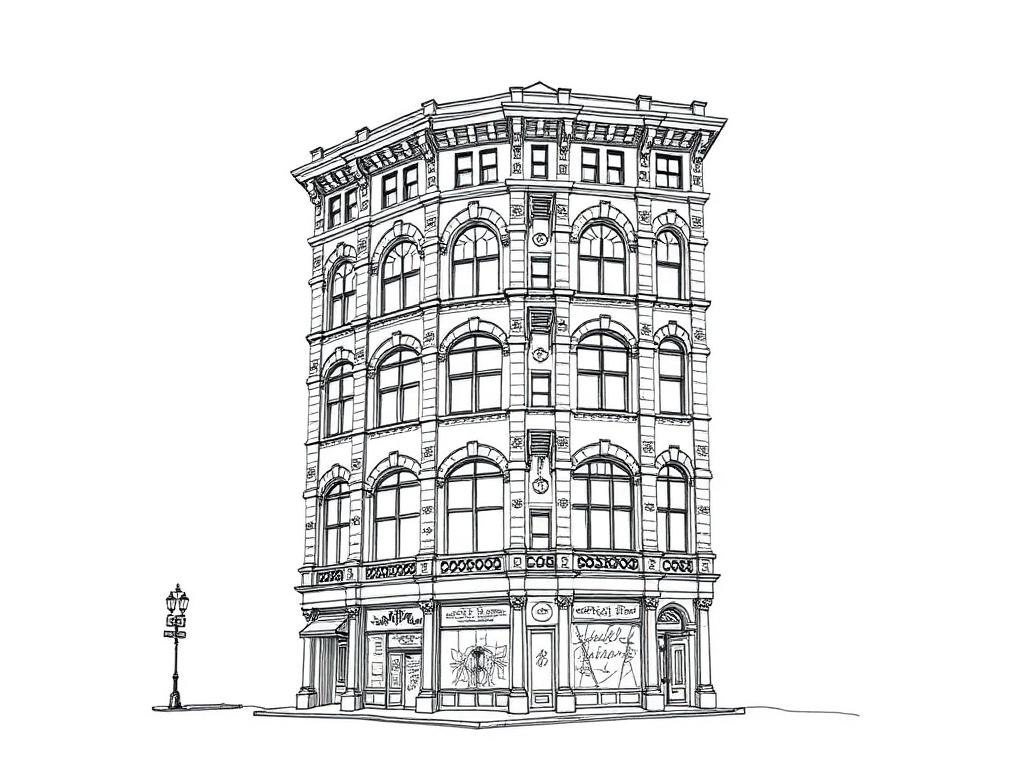
Immediately south, and the same building era. Better repositioned, more competition for every floor, and priced accordingly.
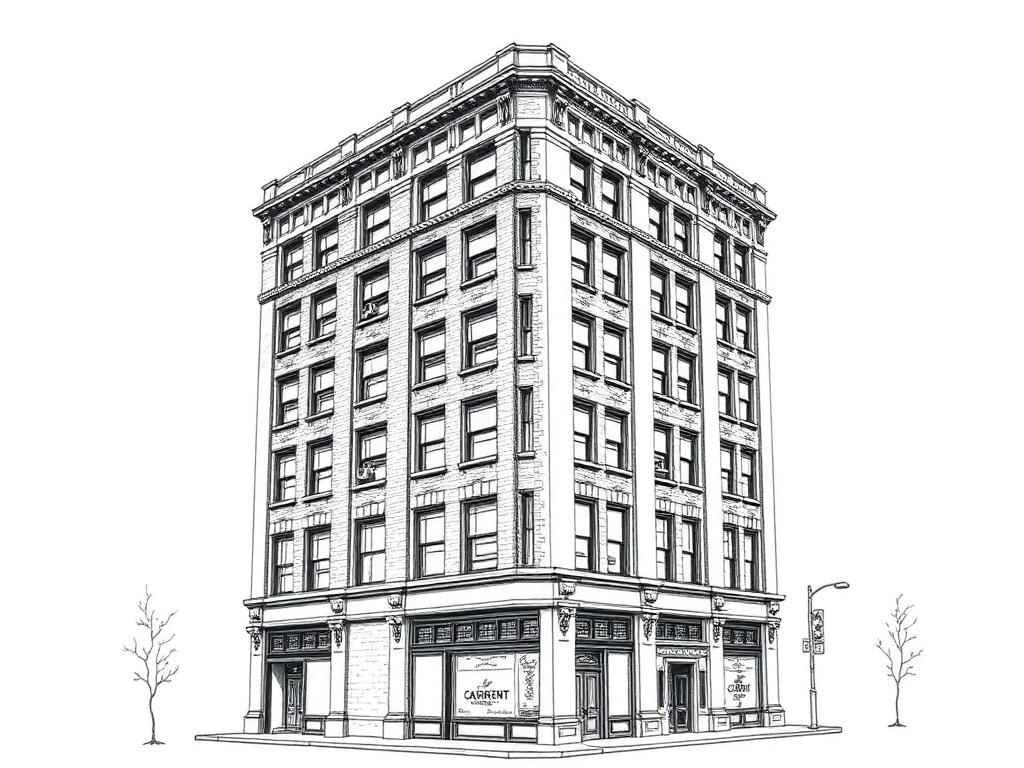
Just north. Same 1920s steel frame, harder street, older systems — and rents well below anything here.
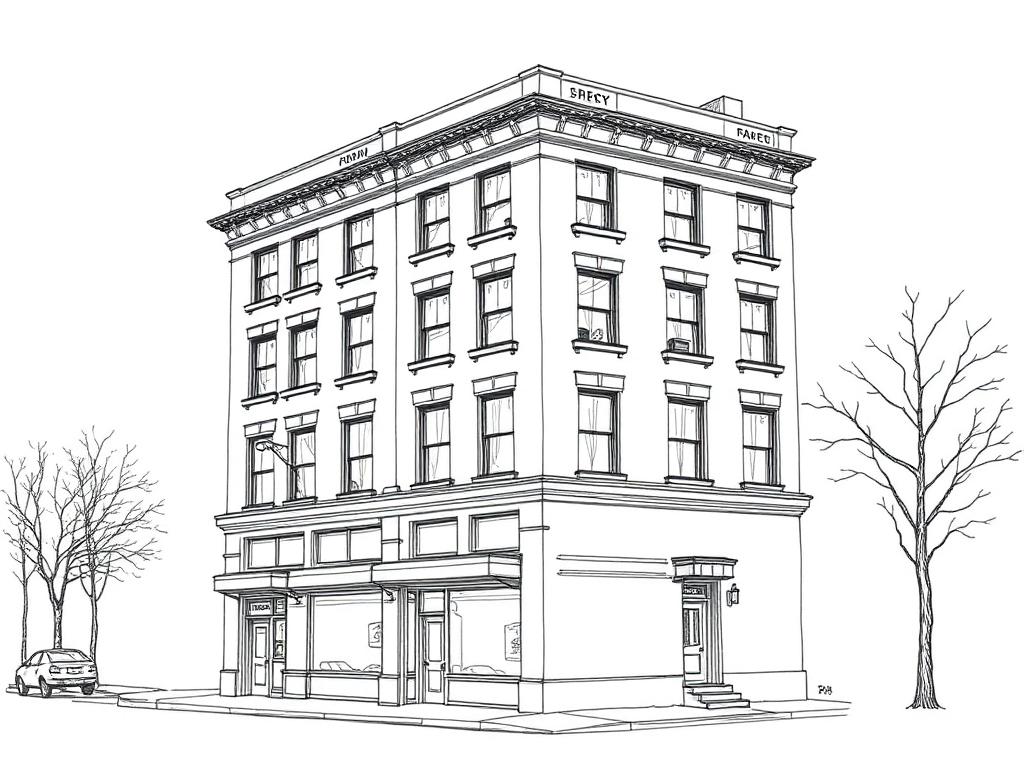
East across Park Avenue South. Quieter prewar avenue floors, more conventional, meaningfully cheaper.
What people ask before they take a loft in NoMad.
01Where exactly is NoMad?
02Why does that matter for renting space?
03What counts as a 'creative office loft' in NoMad?
04How much does loft space cost here?
05What's the smallest space I can rent?
06How do I get to NoMad?
07Can I run a studio or light production here?
08What's the catch with NoMad?
09Is the neighborhood landmarked?
10Do you actually have off-market listings?
Got one we didn't cover? Put it in the brief above, or call 646-291-2018 or text.
The words that decide what you're signing.
Every term that turns up on a tour, in a floor plan or in a lease — what it means, why it costs you, and how it behaves in this neighborhood specifically.
- Submarket label
The neighborhood name a listing is filed under. It is a marketing decision made by whoever is offering the space, not an official designation, and buildings near a boundary get filed differently by different brokers.
Why it mattersRents are compared within a label. A floor filed under a more expensive neighborhood is priced against that neighborhood's comparables, and one filed under a cheaper one is priced against those.
In NoMadNowhere in the city does this matter more. The name has only existed since 1999 and four published definitions are still in circulation — a floor here can appear as NoMad, Flatiron or Midtown South depending on who is marketing it, at a different number under each. Ask what else the space has been listed as, and what it went for under that name.
- Comparable
A recently leased space used to justify an asking rent — usually called a comp. Comps are selected by whoever is making the argument.
Why it mattersTwo brokers can defend very different rents for the same floor by choosing different comps, and neither is lying.
In NoMadBecause the boundaries here are contested, ask which neighborhood the comps come from. A NoMad asking rent supported entirely by Flatiron comps is telling you something about the pitch rather than the market.
- Madison Square North Historic District
A district designated by the Landmarks Preservation Commission on 26 June 2001, covering roughly ninety-six buildings between about 24th and 29th Streets, Broadway to Madison Avenue.
Why it mattersInside it, anything touching the exterior — windows, storefront, signage, rooftop equipment — needs approval before a building permit can issue. Interior work is unaffected.
In NoMadIt covers some of the neighborhood, not all of it. Two buildings a block apart can be on different sides of the line, and it changes your build-out schedule rather than your rent. Ask which side yours is on before you plan signage or a rooftop unit.
- Certificate of appropriateness
The approval the Landmarks Preservation Commission issues for exterior work inside a historic district. Minor work can sometimes be handled at staff level; anything substantial goes to a public hearing.
Why it mattersIt sits ahead of your building permit, not alongside it, and there is no way to buy speed.
In NoMadThe mistake here is a ground-floor or showroom tenant who budgets a storefront correctly and schedules it as though work starts at lease signing. Ask whether the landlord has taken work through the process before — the ones who have will save you months.
- Mixed-use building
A building holding more than one use — commercial floors alongside hotel or residential ones, often with shared lobbies, lifts and loading.
Why it mattersYour neighbours determine your access hours, what you can do after six, how the lifts are shared, and how loading is scheduled. None of it appears on a floor plan.
In NoMadA large share of the loft stock here converted to hotel or residential use from about 2009 onward, so this is the single most useful question to ask about a NoMad building. It is not necessarily a problem — it is a completely different daily experience, and it rarely turns up in a listing.
- Floor load
The weight a floor is rated to carry, in pounds per square foot. Live load is what you can put on it; dead load is the structure itself.
Why it mattersServer racks, dense filing, libraries, equipment and archives all need a number in writing before anything is ordered.
In NoMadThese were showroom buildings, put up to display goods rather than manufacture them, so the ratings are frequently lower than the architecture suggests. A room with fourteen-foot ceilings and cast-iron columns is not automatically a room that will take weight.
- Clear-to-deck
The distance from the finished floor to the underside of the structure above — the true ceiling height, before ductwork, sprinklers or lighting.
Why it mattersBrokers quote the highest number in the room. Retrofitted mechanical runs can take two or three feet off the usable height.
In NoMadAsk for clear-to-deck and separately for the height under the lowest duct. In buildings that have been converted around hotel or residential floors, the mechanical runs are often newer and lower than you would expect from the age of the building.
- Column bay
The clear distance between structural columns.
Why it mattersIt decides whether a desk grid, a showroom layout or a photo backdrop actually fits.
In NoMadGenerous here, because showrooms needed sightlines — buyers had to see a whole collection at once. It is one of the genuine advantages of this stock over purpose-built office. Measure it anyway; drawings on buildings this old are approximate.
- Passenger-freight elevator
A single cab doing both jobs — carrying people during the day and goods when scheduled. Distinct from a dedicated freight shaft.
Why it mattersIt means deliveries and move-ins are booked around passenger traffic, and capacity is usually well below a true freight car.
In NoMadCommon in this stock, because showroom buildings needed to move buyers rather than machinery. Ask whether there is a dedicated freight car at all, what it carries in pounds, and how deliveries are scheduled in buildings that also serve a hotel.
- Loading and the curb
Where a truck can legally and practically stop, and how far your goods travel from the vehicle to the lift.
Why it mattersIn dense commercial districts the constraint is almost never the building. It is the curb.
In NoMadBroadway between 25th and 27th is closed to vehicles entirely, which is pleasant to walk and unhelpful to load. Add hotel deliveries on the side streets and it gets tighter. Ask where a truck actually stops for your building, then go and look at that spot on a weekday afternoon.
- Certificate of occupancy
The city document stating what a building is legally permitted to be used for, floor by floor.
Why it mattersIt governs your use regardless of what the lease says or what the last tenant did.
In NoMadRead it rather than taking a description of it. Buildings here have changed use repeatedly — showroom, wholesale, office, hotel, residential — and floors within one building can carry different permissions.
- Loss factor
The gap between rentable square feet, which is what you pay for, and usable square feet, which is what you can occupy. Shared corridors, stairs, shafts and mechanical rooms are apportioned into your rentable number.
Why it mattersIt moves your real cost more than negotiating the face rent does. Two floors quoted identically can differ by fifteen percent in usable space.
In NoMadAsk for it on the specific floor, not the building average. In buildings carved up around later hotel or residential conversion, the shaft and corridor geometry is genuinely irregular and it varies floor to floor.
- Sublease
Space leased from an existing tenant rather than the landlord, for the balance of their term. You are their tenant; they remain the landlord's.
Why it mattersOften cheaper and frequently built out, but you inherit somebody else's term, their restoration obligations, and a landlord relationship you did not negotiate. Renewal is rarely yours to control.
In NoMadA real part of this market, and frequently the best value in the neighborhood. Read what happens at expiry, and ask whether the landlord would consider a direct lease at that point.
- Letter of intent
A short document setting out the commercial terms — rent, term, free rent, improvement money — before lawyers draft a lease. Generally non-binding, except for any confidentiality or exclusivity clauses inside it.
Why it mattersTerms conceded here are very hard to claw back in the lease, and the parts that are binding are binding.
In NoMadIn a mixed-use building, put the building-services terms in the letter and not just the money: access hours, lift and loading arrangements, and what happens when the hotel has a busy night. Those decide whether the space works day to day.
- Good Guy Guarantee
A limited personal guarantee, near-universal in New York commercial leases. You personally guarantee the rent only until you vacate — provided you give the agreed notice, hand the space back broom-clean, and are current on rent. You are not personally liable for the balance of the term.
Why it mattersIt is the difference between walking away owing two months and walking away owing four years. Some landlords present a full personal guarantee and call it a good guy. Read what the document actually says.
In NoMadAt these rents the notice period is expensive, so negotiate it hard. If you are an established business, ask whether a corporate guarantee or a larger deposit would be accepted instead — with the institutional owners here it frequently is.
- Escalation and porter's wage
How the rent rises over the term. Usually a fixed annual percentage, but sometimes tied to the porter's wage — a union building-service wage rate — or to an inflation index.
Why it mattersA rent that looks flat is not. At three percent a year, the fifth year of a five-year deal is roughly thirteen percent above the first. Budget from the last year, not the first.
In NoMadPorter's wage escalations turn up often in the larger managed buildings here, and they are harder to forecast than a fixed percentage. At this rent level a point of difference compounds into real money — ask what the index has actually done over the last five years.
- TI allowance and work letter
The improvement money a landlord contributes to a build-out, and the document defining who builds what, to what standard, and who pays for it.
Why it mattersAs-is and vanilla box mean very different things. Without a work letter you can find yourself paying for sprinklers, a bathroom or a demising wall you assumed came with the space.
In NoMadReal improvement money exists here on a decent-sized deal. If your fit-out touches the facade or the roof, get the Landmarks approval risk allocated explicitly, and agree what happens to your free rent if that approval runs long — an allowance is worth much less if you are paying rent on a space you cannot open.
You know what to ask now. Tell us what you're after.
Seven questions, no account, nothing to download. A person reads every one — and comes back with floors that match, including the ones that never reach a listing site.
Written from buildings we've actually walked. If something here is wrong, or a term is missing, tell us — we'd rather fix it than have it repeated back to us on a tour.
Got a loft
building here?
We probably know a tenant for it. Quietly.
Let's talk→